
How to Search Burlington County Court Records
New Jersey centralizes court searches through NJ Courts rather than a Burlington-only system. The "Find a Case" tools cover civil and foreclosure cases, criminal cases, criminal judgments, judgment liens, tax court, and municipal matters. Start by deciding the case type, because each tool takes different inputs. Civil and foreclosure searches use party name or docket number. Criminal searches use name and county. Municipal tickets need a ticket or complaint number.
Have your basics ready before you begin: a full name, the county, and any case, docket, complaint, or ticket number you already hold.
- Decide whether the case is civil, criminal, or municipal.
- Open the matching NJ Courts search tool.
- Enter a party name, or a docket or complaint number for a tighter result.
- Select Burlington County where a county filter appears.
- Open the case summary, then follow records request steps for a certified copy.
The electronic Case Jacket holds many of the documents you will want to view online.
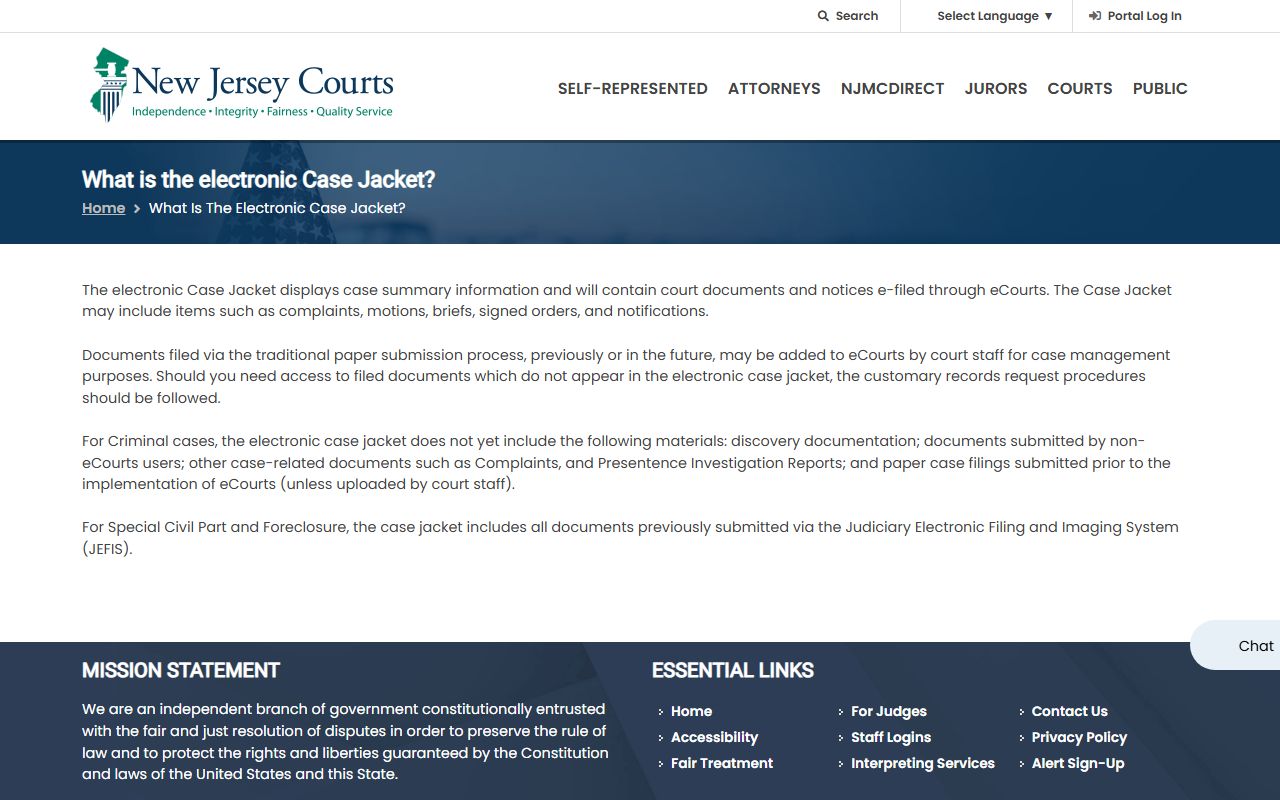
That FAQ at njcourts.gov notes the Case Jacket may include complaints, motions, briefs, signed orders, and notices.
Burlington County Court Records Search Fields
The civil and foreclosure case jacket search accepts a party name or a docket number. For a person, you pick the individual option and enter a last and first name. Short entries of two characters or fewer return exact matches only, so use three or more characters in either name for a wider result. The table below lists the main fields on the public civil and foreclosure search.
| Field Label | Type | Required | Notes / Format |
|---|---|---|---|
| Search by Party Name | Tab / radio | One path | Searches case jackets by name. |
| Individual | Radio | Yes for a person | Select for a person search. |
| Last Name | Text | Yes | Use 3+ characters for broader results. |
| First Name | Text | Yes | Same short-entry exact-match rule. |
| Docket Number | Text | One path | Searches case jackets by docket number. |
| Search | Button | n/a | Runs the query. |
For criminal judgments, NJ Courts adds four identifiers: defendant name, SBI number, complaint number, and indictment number. The SBI number is the most precise when you have it. Municipal tickets work the other way; a countywide name search is not the right first step, since you need a ticket or complaint number to pull a municipal case.
If no result appears, check the spelling, the docket or ticket number, the county, and the case type. Then contact the right court or office. Public systems may show a case summary while limiting document access to attorneys, parties, or registered users.
Types of Burlington County Court Records
Court records split by the division that made them. The Superior Court Civil Division and Special Civil Part handle lawsuits, landlord-tenant cases, and foreclosures. The Criminal Division handles indictable offenses. The Family Division handles divorce, custody, support, and juvenile matters. Municipal courts handle traffic and disorderly persons cases.
That structure decides which search tool you use and which fields it accepts.
- Civil and Special Civil Part case files, including landlord-tenant and small claims.
- Foreclosure and general equity matters in the Chancery Division.
- Criminal cases and criminal judgments in the Superior Court Criminal Division.
- Family Division cases such as divorce, custody, and support.
- Municipal court tickets and complaints handled by local courts.
Note: divorce and family files are court records, so the County Clerk does not maintain them.
What Burlington County Court Records Show
A New Jersey case record holds a standard set of fields. The Case Jacket shows the case summary, the parties, the docket entries, and many e-filed documents. The list below is a sample inventory of the fields you can expect when a case is public.
| Field | What It Shows |
|---|---|
| Docket Number | The unique case identifier. |
| Court / Vicinage | The county and division handling the case. |
| Filing Date | When the case opened. |
| Parties and Roles | Plaintiff, defendant, petitioner, or respondent. |
| Case Type | The cause of action or charge category. |
| Status / Disposition | Open, closed, or the final outcome. |
| Docket Entries | Motions, orders, judgments, and notices. |
Criminal case jackets show less. NJ Courts says they do not yet include discovery, presentence reports, some complaints, or older paper filings unless staff upload them.
Public Access Framework for Burlington County Court Records
New Jersey runs two parallel access systems. County agency records fall under the Open Public Records Act, N.J.S.A. 47:1A-1 et seq. Court records fall under court rules, mainly Rule 1:38. The state DCA page explains that OPRA was meant to widen public access and to create an appeal path when an agency denies a request. Court files, though, follow NJ Courts procedures, not the County Clerk.
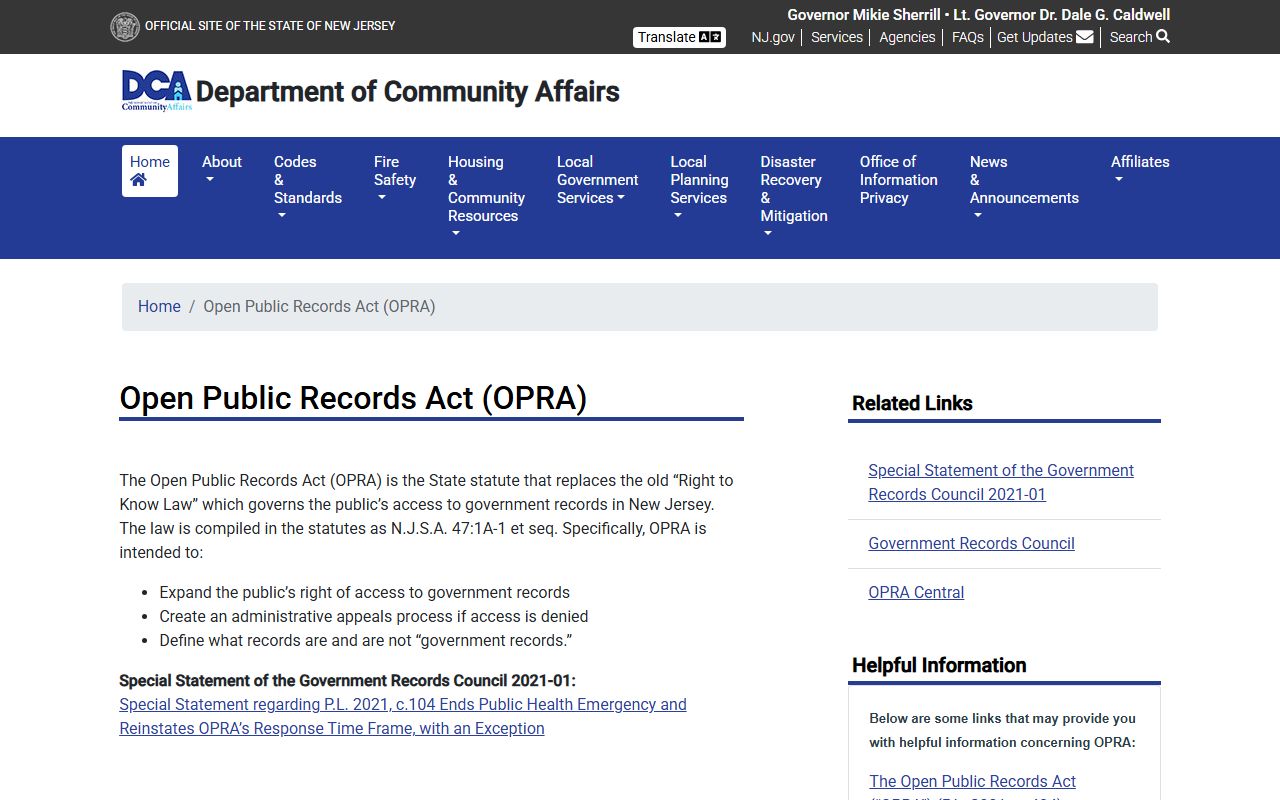
You can read the state OPRA overview at nj.gov. When a county office denies an OPRA request, the appeal route runs through the Government Records Council.
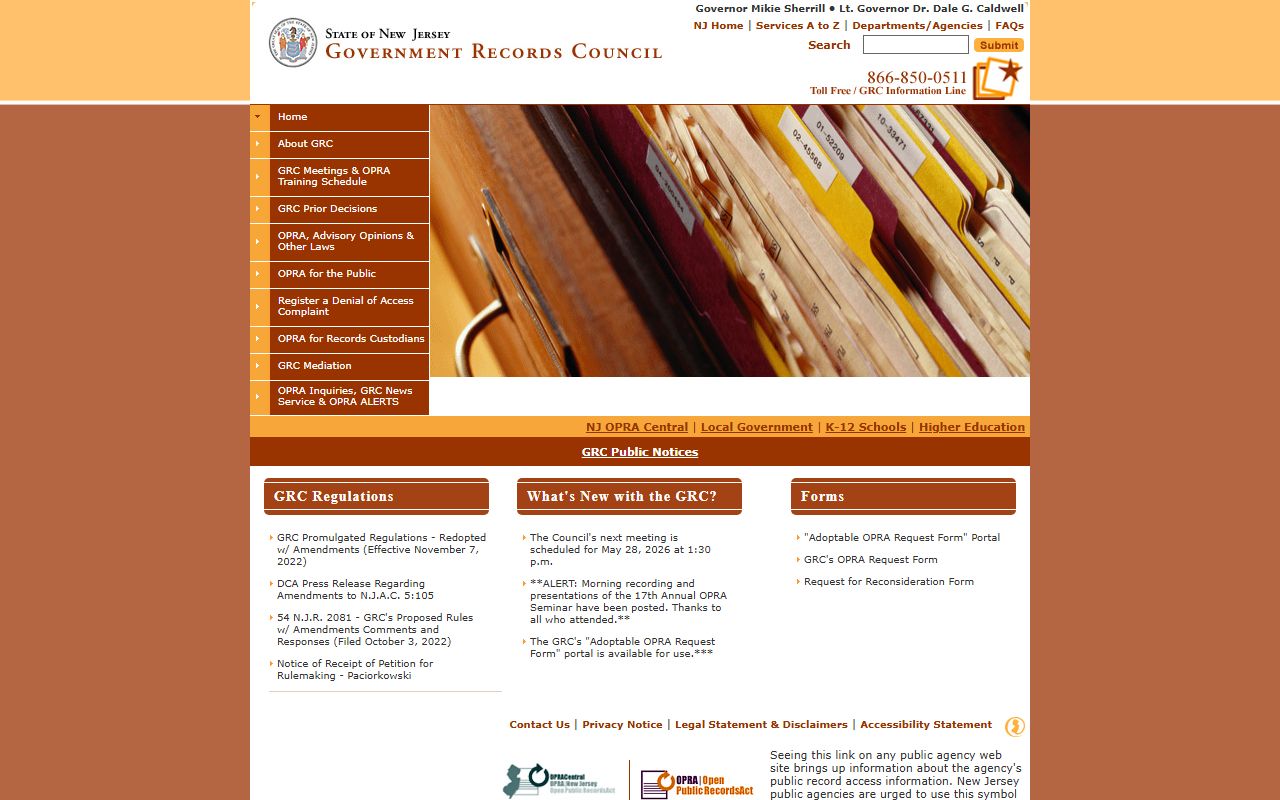
The Council site at nj.gov/grc offers custodian guidance and a way to challenge a denial.
Note: A court-record denial is not fixed by calling the County Clerk; court records follow the judiciary's own request rules under Rule 1:38.
Records That Are Sealed or Confidential in Burlington County
Several record types stay closed. Juvenile delinquency files are safeguarded under N.J.S.A. 2A:4A-60. Adoption judgments and proceedings are sealed under C.9:3-51 and C.9:3-52. Expunged matters are isolated under N.J.S.A. 2C:52. Grand jury material and many domestic violence and victim records are also restricted. Even in an open file, the court redacts Social Security numbers, account details, and minor identities.
To view a sealed record, a person usually needs a court order or a statute that grants access. Expungement is filed in the Superior Court, and a 2025 law adds a state portal to check an order's processing status.
Public criminal history is also a separate track. A public case docket may be visible through NJ Courts, but official background checks run through New Jersey State Police processes and follow their own eligibility and use rules.
Court Clerk vs County Clerk in Burlington County
This is the single most common mix-up in a Burlington County court records search. The County Clerk records land documents and runs elections, passports, and notary services. It does not keep court files, divorce records, or vital records, and its own page says so plainly. Court files run through NJ Courts and the Superior Court Clerk's Office. The table makes the split clear.
| Record Need | Court / NJ Courts | Burlington County Clerk |
|---|---|---|
| Civil and criminal cases | Yes, through NJ Courts | No |
| Divorce and family files | Yes, Family Division | No |
| Deeds, mortgages, and liens | No | Yes, through PRESS |
| Certified court copies | Yes, court records process | No |
So if the item is a deed, mortgage, or lien, start with the County Clerk and PRESS. If it is a court filing, start with NJ Courts.
Federal Court Records for Burlington County
Some Burlington County matters are federal, not state. The county sits within the U.S. District Court for the District of New Jersey, which hears federal civil and criminal cases. Federal records use their own systems and are separate from NJ Courts.
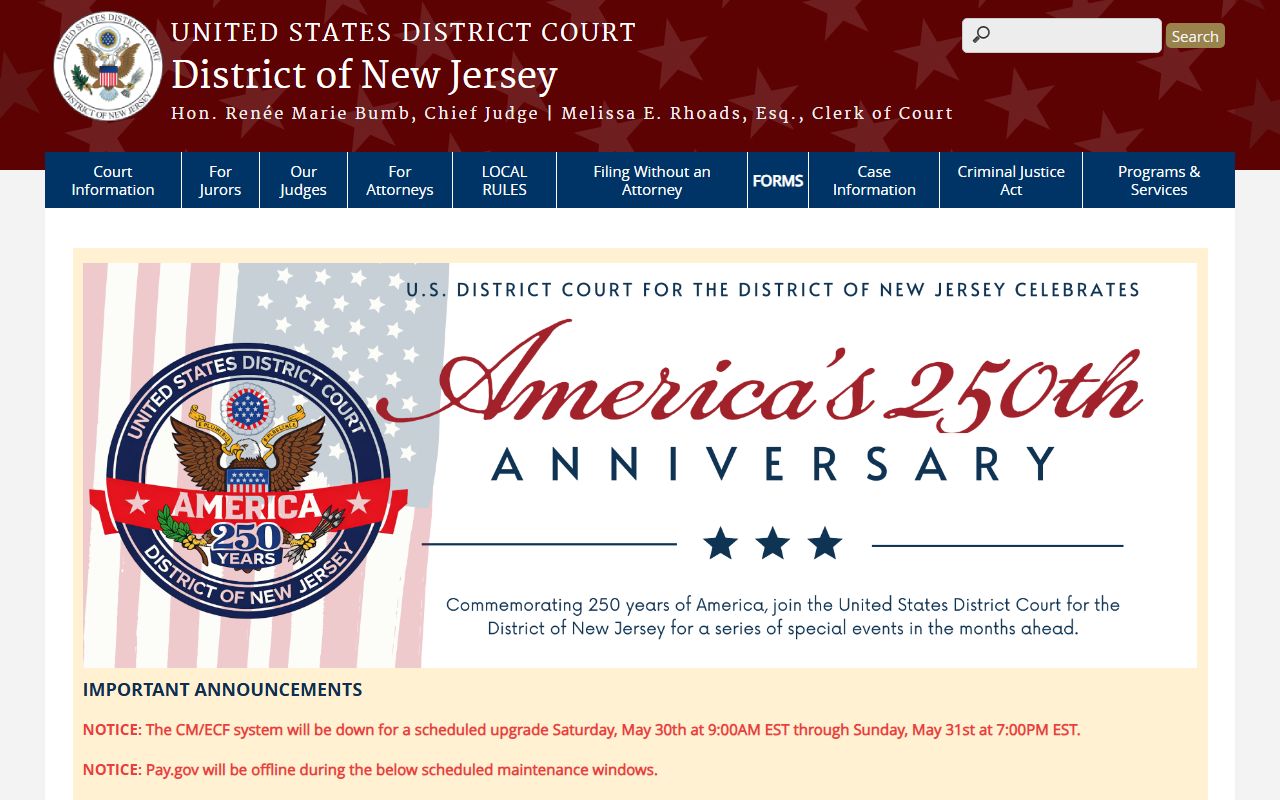
The court site at njd.uscourts.gov explains case types and filing. Lawyers and parties file through CM/ECF.
The CM/ECF portal ties into PACER for public docket access. Appeals from the district court go to the Third Circuit.
The Third Circuit covers federal appeals. Bankruptcy is separate and runs through its own court and PACER.
In-Person Court Record Requests
If a document does not appear online, NJ Courts says to follow customary records request steps. The Burlington Vicinage works from the county court facility in Mount Holly. Bring the docket or case number, a photo ID, and any fee the office requires. Plan for security screening at the door.
Burlington County Court Facility
49 Rancocas Road
Mount Holly, NJ 08060
609-288-9500
Mon-Fri 8:30 a.m.-4:30 p.m.