
Where to Find Burlington County Records
New Jersey splits these records by type of office. Marriage licenses and certificates are a municipal job. Divorce records are a court job. The county clerk does neither in the way many people expect. The Burlington County Clerk records land documents and runs elections, and the office states plainly that it does not keep divorce records. So the first step is to match the record you need to the right office.
The table below maps each common record to where it lives. Use it as a quick guide before you make a call or plan a visit.
| Record You Need | Where to Get It |
|---|---|
| Marriage license | The New Jersey municipality where a party lives, or where the ceremony occurs if both are nonresidents. |
| Marriage certificate | The municipal registrar where the event was recorded, or the New Jersey Department of Health. |
| Divorce record | The Superior Court of New Jersey, Family Division. |
Note: the Burlington County Clerk does not issue marriage licenses or keep divorce records, so start with the town registrar or the court instead.
Burlington County Marriage License Records
In New Jersey, marriage, civil union, and domestic partnership licenses are issued and recorded at the municipal level. That means you apply at a town hall, not at the county. Apply in the New Jersey municipality where either party lives. If both partners live out of state, apply in the town where the ceremony will take place. The local registrar there handles the paperwork.
Because the process is local, the exact rules can shift from town to town. Each municipal registrar sets the application hours, the ID you must bring, witness rules, the fee, and the waiting period. There is no single county fee schedule for a Burlington County marriage license, and there is no county form to fill out. The town controls all of it. So the smart move is to call the registrar in the right municipality first and ask what they need before you show up.
Once the ceremony is done, the officiant returns the license to be recorded. After that, the record sits with that municipality. Keep that in mind when you later need a certified copy.
How to Apply for a Marriage License
The path is the same for most couples, even though the town details differ. Start local, gather what the registrar asks for, then get the license before you set a firm ceremony date. The steps below walk through the full process from start to certified copy.
- Find the New Jersey municipality where either party resides, or where the ceremony will occur if both are nonresidents.
- Contact that municipal registrar to ask about application hours, ID rules, witnesses, the fee, and the waiting period.
- Apply for and obtain the marriage license from that municipal registrar.
- Schedule the ceremony with the Burlington County Clerk or another authorized officiant.
- After the ceremony, the officiant returns and records the license as the municipal registrar requires.
- Request certified copies from the municipality where the event was recorded, or from New Jersey vital records.
Plan for the waiting period. New Jersey towns build in a short wait between applying and getting the license, so do not leave it to the last day before a wedding.
County Clerk Wedding Officiation
The Burlington County Clerk, Joanne Schwartz, can officiate marriage ceremonies. This is a service, not a licensing function. The Clerk performs the ceremony but does not issue the license or keep certified copies of the certificate. Couples still get the license from a municipal registrar first. Clerk weddings are by appointment only and are scheduled mostly on Wednesdays at the Lyceum of History and Natural Science in Mount Holly.
You can read the county's own write-up of these services before you book a date. The Burlington County Clerk marriage services page lays out the officiation offer and points couples to the municipal level for licensing.
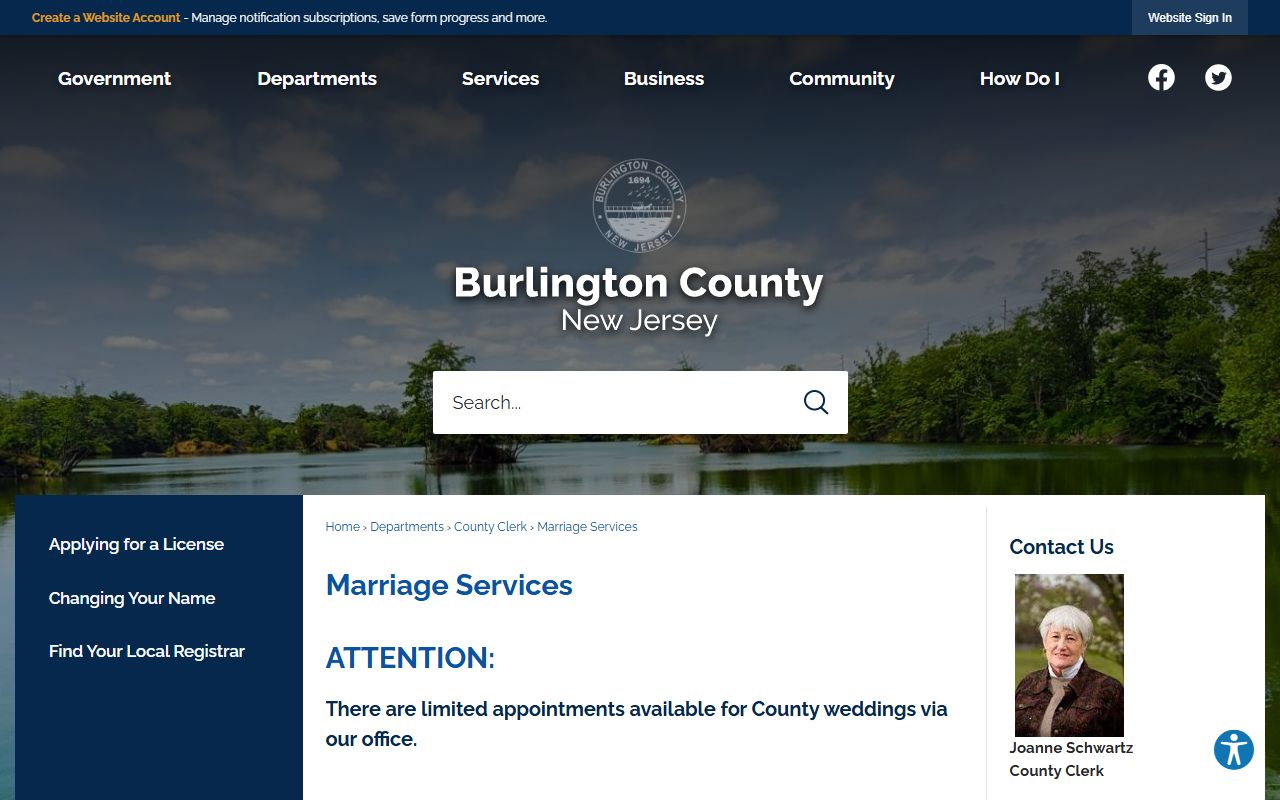
To book a ceremony with the County Clerk, the page lists 609-265-5122 or countyclerk@co.burlington.nj.us as the contact. Use that contact for officiation only, not for license or certificate questions.
Who Can Officiate in New Jersey
You have more than one choice for who performs the ceremony. The County Clerk is just one option, available by appointment. State rules allow several others to marry a couple, so most people can find an officiant who fits their plans.
- Ministers of any religion.
- Retired judges.
- Mayors and deputy mayors.
- Certified Civil Celebrants.
- The Burlington County Clerk, by appointment.
Whoever officiates, the same license rule applies. The couple must already hold a valid license from the right municipal registrar before the ceremony.
Burlington County Marriage Certificate Records
A license lets a couple marry. A certificate proves the marriage happened and was recorded. People often need a certified marriage certificate for a name change, a passport, immigration, taxes, or a benefits claim. To get one, go to the municipal registrar in the town where the event took place. That office holds the recorded certificate.
You can also order vital records, including marriage, birth, death, civil union, domestic partnership, and divorce records, through the state. The New Jersey Department of Health vital records page explains how to request certified certificates and what each request needs.
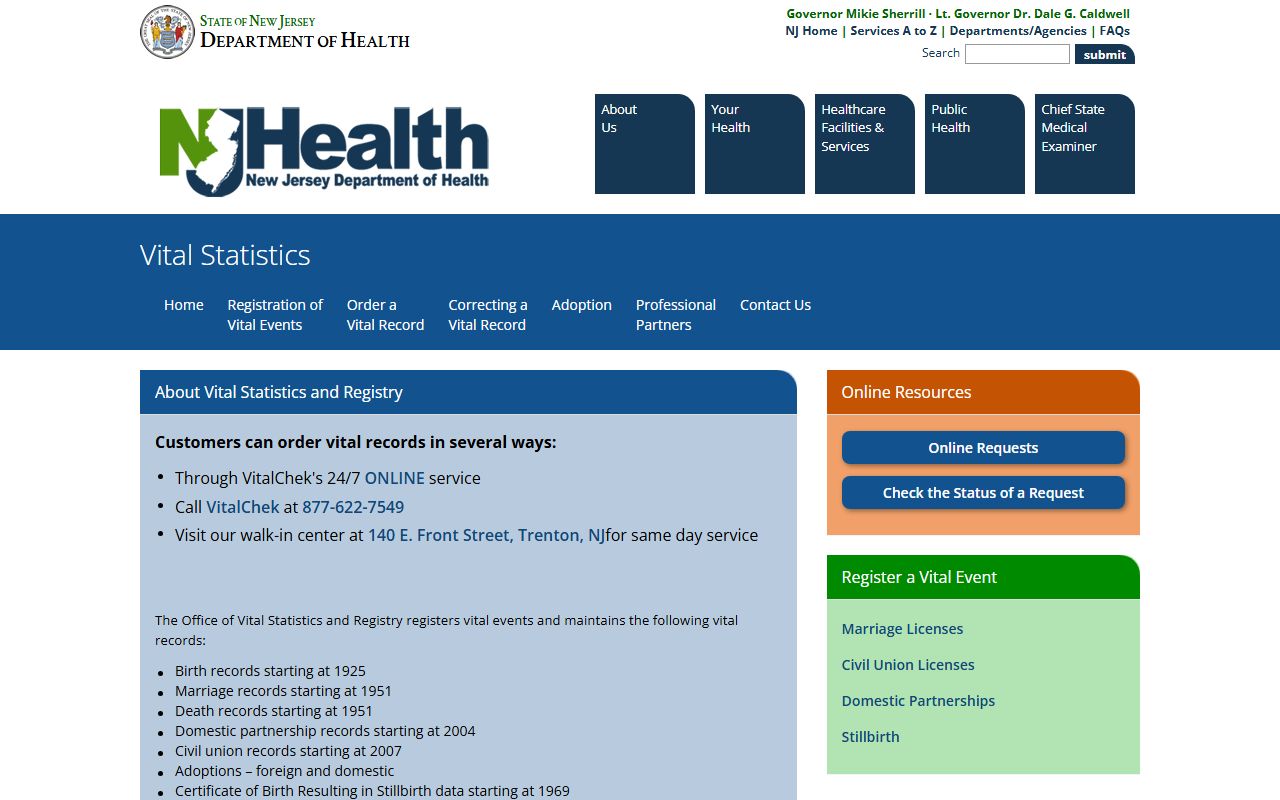
Older marriage and vital records may sit in state or municipal archives, depending on the date and the office that held custody. The right source for a historical record can differ from the source for a recent one. When in doubt, ask the municipal registrar where the event was recorded.
Burlington County Divorce Records
Divorce records are court records. They are handled by the Superior Court of New Jersey, Family Division, not by the County Clerk. The Burlington County Clerk states directly that it does not maintain divorce records, so do not start there. Burlington County sits in Vicinage 3, and family cases for the county run through that court.
To find a divorce file, use the New Jersey Courts self-help divorce resources, the electronic filing tools as the court directs, or contact the Burlington Vicinage for case-specific copies. The NJ Courts Burlington Vicinage page lists the court facility, hours, and phone. For general court searches and how the case jacket works, the court records page covers the statewide tools in more detail.
A divorce file can hold a lot of paper. Below are the documents you may find in one, though not all of them are open to the public.
- Complaint for divorce and any answer or counterclaim.
- Case information statement with financial details.
- Custody and parenting orders.
- Support orders for a spouse or children.
- Property settlement agreement.
- Final judgment of divorce.
- Post-judgment motions filed after the divorce.
Access is not always full. A docket entry or a final judgment may be available under court-record rules, while attachments that involve children, financial account numbers, domestic violence, or a sealing order can be withheld or redacted. The court decides what stays open and what stays private.
How to File for Divorce
Filing for divorce in New Jersey runs through the Superior Court, Family Division. The court provides self-help materials so people can understand jurisdiction, grounds, and the forms before they file. The steps below give the general order, from the first check on residency to the final certified copy.
- Confirm New Jersey residency and jurisdiction, and review the grounds, using NJ Courts self-help divorce materials.
- Prepare the required Family Division forms, including the complaint and any financial disclosures.
- File with the Superior Court, Family Division, through the required electronic or paper process.
- Pay the filing fee, or apply for a fee waiver if you qualify.
- Serve the other spouse with the filed papers.
- Take part in case management, mediation, custody and support proceedings, and the final hearing or an uncontested judgment.
- Request certified copies through court records procedures, not the County Clerk.
Note: certified divorce copies come from the court, so do not send a divorce-decree request to the county clerk's office, which does not keep these files.
Legal Help for Family Matters
Family cases can get complicated, and many people want help before they file or respond. For most family civil matters, the practical starting points are the NJ Courts self-help center and local legal aid groups. These cover divorce, custody, and support questions for people who handle a case without a private lawyer.
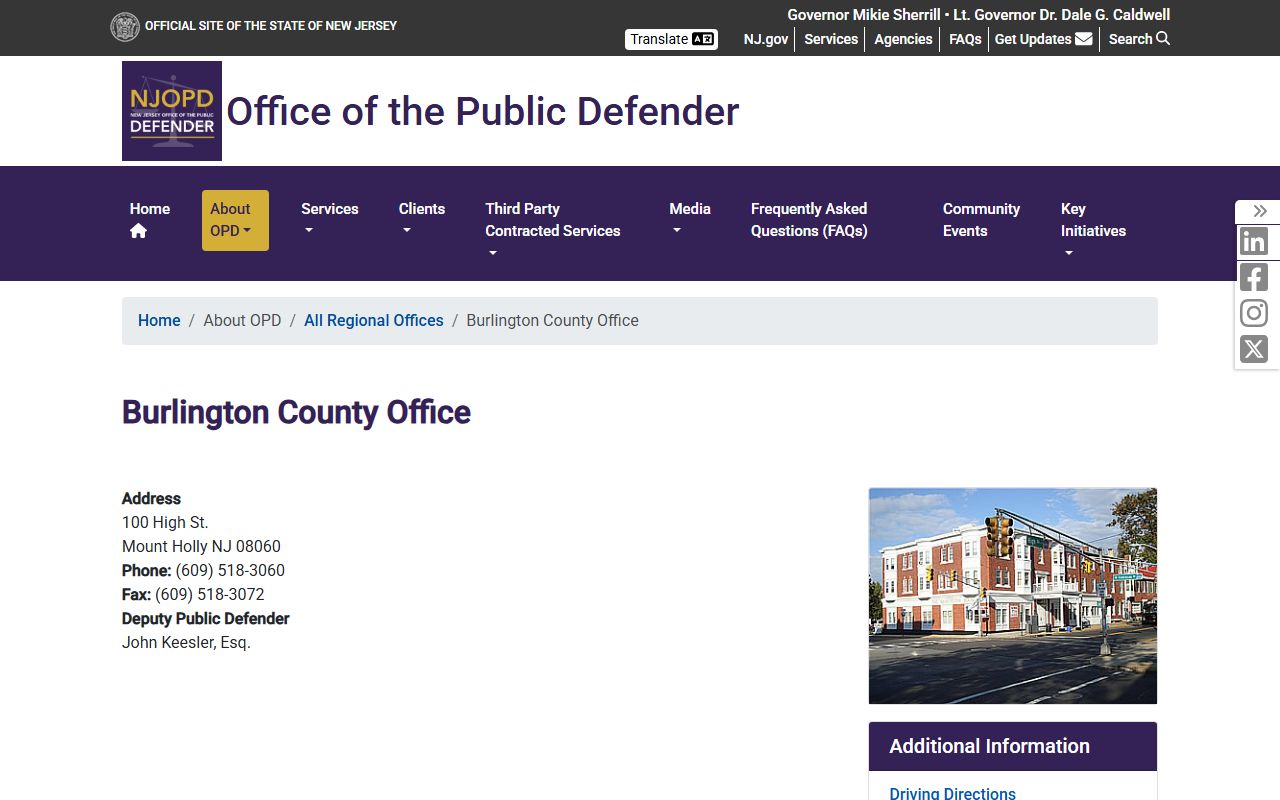
The Burlington Office of the Public Defender mainly handles criminal defense for people who cannot afford a lawyer. Statewide, though, the agency also covers parental representation and law guardian work, which touch family cases involving children. You can see the local office details on the Burlington Office of the Public Defender page.
For estate, guardianship, and probate questions that can overlap with a family matter, the Surrogate's Court page explains where those records live. Routine recorded documents, by contrast, run through the Burlington County Clerk.